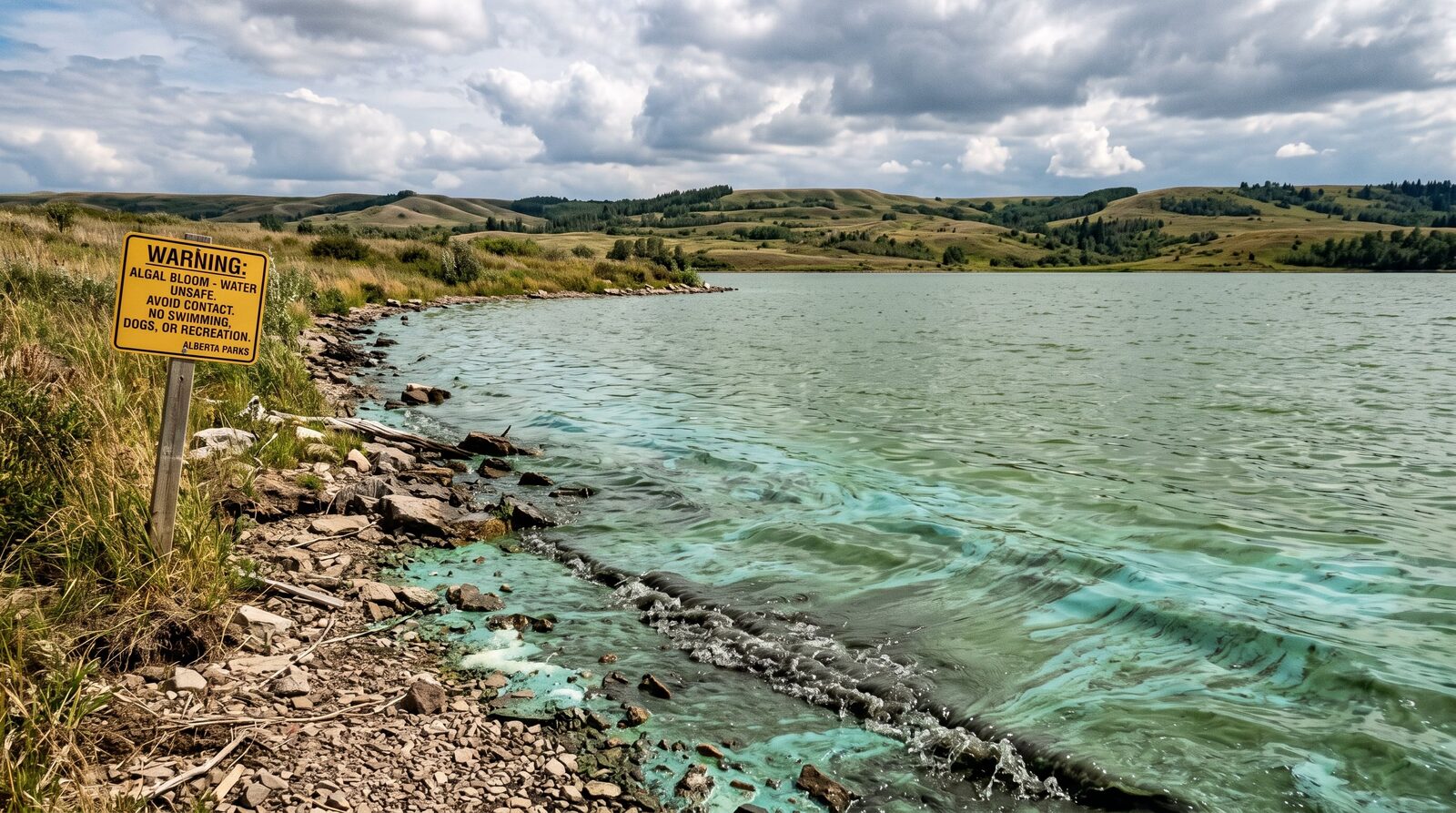
Blue-green algae advisories are issued most summers somewhere in the Calgary area, and knowing what an advisory actually means, and how to check current ones, matters more than memorizing a fixed list of "safe" and "unsafe" water bodies, since the status changes year to year and even week to week.
This is the dedicated reference on blue-green algae specifically; our guide to where dogs can swim in Calgary covers the rest of Calgary's water safety picture, including currents and general river conditions.
What Is Blue-Green Algae, Exactly?
Despite the name, it's not actually algae, it's cyanobacteria, a type of bacteria that can photosynthesize like algae and forms visible blooms under the right conditions: warm temperatures, calm water, and high nutrient levels, most commonly from June through September in Alberta.
Not every bloom produces toxins, but there's no reliable way to tell a toxic bloom from a harmless one just by looking at it, which is exactly why the standard advice is to treat any visible bloom as a real risk rather than trying to judge it yourself.
What Does a Blue-Green Algae Bloom Actually Look Like?
Scum, grass clippings, or fuzzy paint-like mats floating on or near the water surface are the classic signs. Color varies and isn't a reliable indicator on its own: blooms can appear blue-green, greenish-brown, turquoise, or even reddish depending on the specific organism and conditions.
If the water looks unusually cloudy, has a strong odor, or has any surface scum that wasn't there on a previous visit, treat it as a potential bloom even without a formal posted advisory yet, since official signage sometimes lags behind an actual bloom starting.
How Do I Check for a Current Advisory Before a Swim?
Alberta Health Services maintains an active blue-green algae advisories map for water bodies across the province, updated through the swimming season as conditions change; for beaches specifically inside provincial parks, the Alberta Parks advisories page is the equivalent resource. Check before visiting an unfamiliar lake or pond specifically, not just the rivers you already know, since advisories are issued by specific water body, not city-wide.
As a general pattern worth knowing: major flowing waterways like the Bow and Elbow Rivers within Calgary's city limits are rarely under algae advisories at all, since moving water doesn't create the calm conditions cyanobacteria need. It's the surrounding lakes and recreational reservoirs outside the city that see blooms regularly during peak summer heat, which is exactly why checking before an unfamiliar lake trip matters more than worrying about your regular river-park routine.
Posted signage at the water body itself is also a real-time indicator, and it's worth actually reading it rather than walking past a "posted advisory" sign because the water still looks fine from a distance. If the advisory is active but the bloom isn't visible in a particular area of the lake or reservoir, that specific clear area is generally still safe to use; the risk is tied to visible bloom contact, not simply being anywhere on an advisory list.
What Happens if My Dog Is Exposed to Blue-Green Algae?
Symptoms can appear within about an hour of exposure and can include vomiting, diarrhea, drooling, weakness, disorientation, or in serious cases, seizures. Exposure to cyanobacteria can be fatal to dogs, which is exactly why this is treated as a genuine emergency rather than a wait-and-see situation, even for symptoms that start out looking mild.
Rinse your dog thoroughly with clean water as soon as possible after any suspected exposure, to reduce ongoing skin and ingestion risk from residue in the coat, and call your vet or an emergency clinic immediately if you see any symptoms. If you personally experience symptoms after water contact, Alberta's Health Link at 811 is the equivalent human resource.
Which Calgary-Area Water Bodies Have a History of Advisories?
Advisory history shifts year to year, but a few local examples are worth knowing specifically because they show this isn't a hypothetical risk. Lake Sundance, one of Calgary's private southeast lake communities, has had a blue-green algae advisory in past summers. Eagle Lake, Severn Creek Reservoir, and Clear Lake, all east of the city, have also been placed under advisories in past years.
This is exactly why checking the current Alberta Health Services advisory list matters more than trusting a fixed mental list of "safe" lakes, since a body of water with no history of problems can still bloom in a hot, calm stretch of summer, and one with past history isn't guaranteed to have a repeat every year.
Does This Affect Calgary's River Parks Too?
Rivers with steady current, like the sections of the Bow and Elbow that run through parks such as Sue Higgins and Sandy Beach, are generally lower risk for blue-green algae blooms than calm, warm, standing water, since moving water doesn't create the still conditions cyanobacteria need to bloom. Bowmont Park's stormwater pond, being calmer standing water, is a more plausible bloom location than the open river sections nearby, worth keeping in mind specifically at that park.
What Time of Year Is the Highest Risk Window?
Late July through August is typically the highest-risk stretch in Alberta, when water temperatures peak and calm conditions have had the longest stretch to build nutrient concentration. Risk drops off through September as temperatures cool, though it's not a hard cutoff, so keep checking advisories through early fall rather than assuming the risk period has a fixed end date.