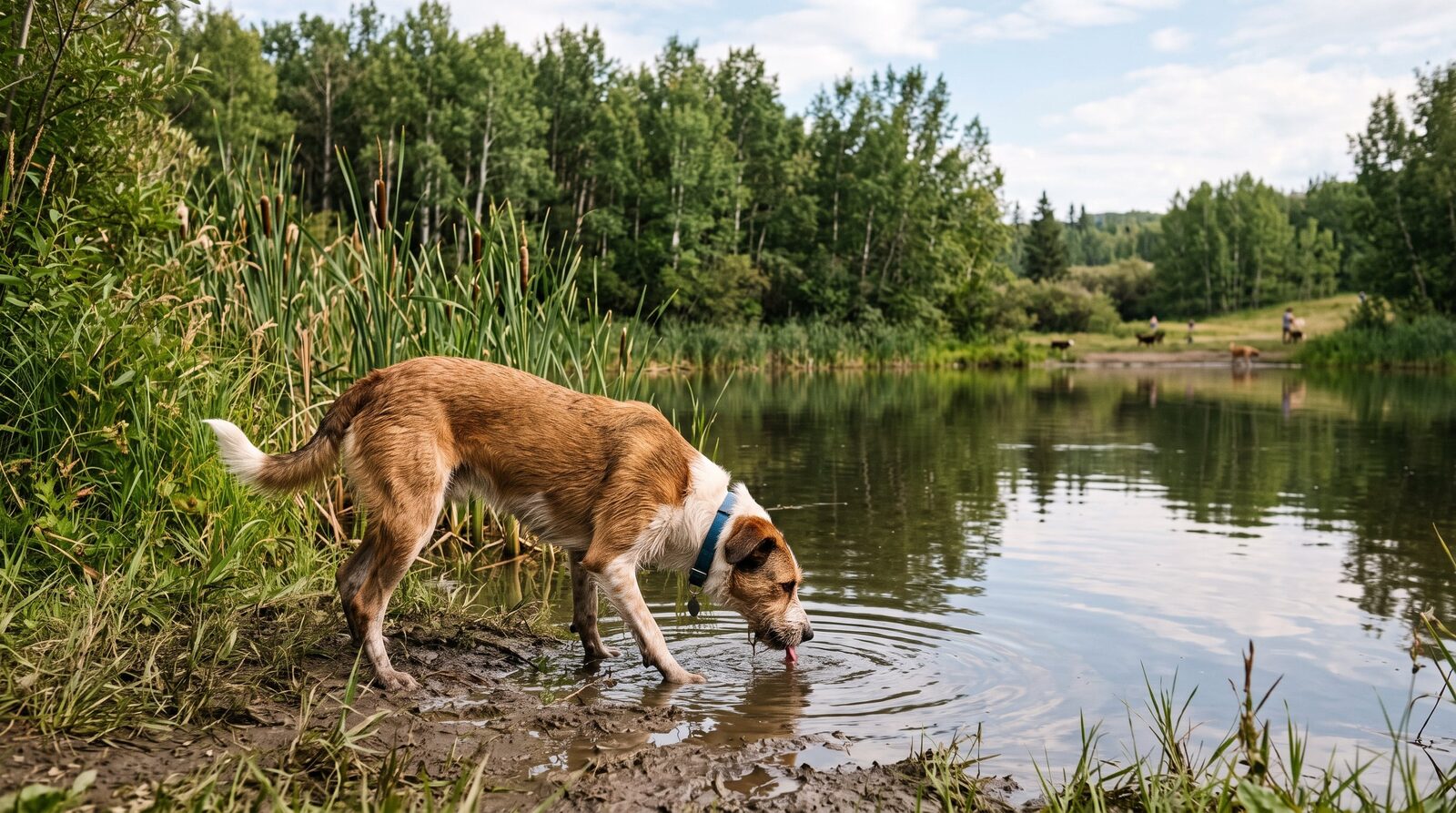
A published study on parasites at urban dog parks found Giardia present in 24.7% of dogs attending parks in Calgary specifically, nearly one in four. Here's what that actually means for your dog, and what to actually do about it.
What Is Giardia, and How Do Dogs Get It?
Giardia is a microscopic parasite that lives in the intestines of infected animals and is shed in feces as hardy cysts that can survive for weeks in cool, moist conditions, including puddles, ponds, and damp soil at parks. A dog becomes infected by swallowing these cysts, most commonly by drinking contaminated water or sniffing and licking contaminated ground.
It's genuinely common: North American studies generally put infection rates in pet dogs under 15%, but the Calgary-specific dog park figure above is notably higher, likely reflecting how much dog-to-dog and dog-to-environment contact happens at a shared off-leash space compared to a typical backyard.
Does Every Infected Dog Get Sick?
No, and this is the detail most owners don't expect. Infection is much more common than actual illness. Many dogs carry Giardia without ever showing symptoms, and healthy adult dogs with mild or no symptoms often don't require treatment at all.
Puppies, senior dogs, and dogs with weakened immune systems are the ones most likely to actually develop symptomatic disease, and they're the group where testing and treatment matter most if diarrhea shows up.
What Are the Symptoms of Giardia in Dogs?
The main symptom is diarrhea, often watery, greasy-looking, sometimes with mucus, and it can come on suddenly or be intermittent rather than constant. Additional signs can include:
If your dog has intermittent loose stool after a park visit that doesn't fully resolve within a few days, Giardia is worth mentioning specifically to your vet rather than assuming it'll pass on its own.
How Is Giardia Diagnosed and Treated?
Diagnosis is typically based on a fecal sample, checking for cysts or Giardia antigens, combined with your dog's symptoms and history. A single negative test doesn't always rule it out, since cyst shedding can be intermittent, so your vet may recommend more than one sample if symptoms persist despite a first negative result.
Treatment generally combines fenbendazole (an anti-parasitic) with metronidazole (an antibiotic), typically over 5 to 10 days, along with supportive care like fluids for dehydration in more severe cases. Most dogs recover fully with proper treatment, though reinfection is genuinely easy if the same environment keeps getting recontaminated.
Can I Catch Giardia From My Dog?
It's possible but uncommon. Most dog-specific Giardia strains don't readily infect humans, though some overlapping strains can be zoonotic. Basic hygiene, washing hands after handling waste and before eating, is sensible regardless, particularly in a household with young children, elderly family members, or anyone immunocompromised.
Does the City of Calgary Provide Water at Off-Leash Parks?
No. The City of Calgary does not maintain or test water stations in off-leash areas, and explicitly advises owners to bring their own water rather than rely on any shared or on-site source. Any communal bowl or unofficial water station you see at a park was set up informally by other dog owners, not the city, and can be contaminated by any infected dog that's used it before yours.
This is one of the clearest, most actionable facts in this whole topic: bringing your own water isn't just a nice-to-have, it's the City's own stated position on how to actually stay safe.
How Do I Reduce My Dog's Giardia Risk at Calgary Parks?
Bring your own water and actively discourage drinking from puddles, ponds, or river edges, even brief sips while playing. This is the single most effective prevention step, since ingestion of contaminated water or standing puddles is the primary transmission route at parks.
Skip communal bowls at parks entirely, for the reason above, and pick up your own dog's waste immediately and completely, since environmental contamination from feces is exactly what sustains the cycle at a shared park. This is both a bylaw requirement carrying a $300 fine and a genuine public health measure for every dog using that space after yours. A parasitological study of dog feces in Calgary's public off-leash parks, published in Nature's Scientific Reports, specifically found that off-leash park visitors are likely to be exposed to large amounts of dog feces, reinforcing why immediate cleanup matters as much as any individual prevention step.
Avoid letting your dog drink from areas where water pools after rain or snowmelt specifically, since standing water is a higher-risk source than flowing river water, though neither is guaranteed safe.
Is Leptospirosis Also a Risk at Calgary Dog Parks?
Yes, and it's worth knowing about alongside Giardia rather than instead of it, since both spread through contaminated water and share some of the same prevention steps. Leptospirosis is a bacterial infection, not a parasite, and Calgary vets specifically note the Bow River as a real source, with the river's coliform count cited as a factor in cases seen after dogs swim there.
Symptoms differ somewhat from Giardia: muscle pain, vomiting, diarrhea, loss of appetite, and lethargy are the common signs, and in severe cases leptospirosis can lead to kidney damage. If your dog shows these signs after a swim, mention leptospirosis specifically to your vet, not just giardia, since the two require different treatment.
Should My Dog Avoid Dog Parks if They Currently Have Giardia?
Yes, until they've completed treatment and symptoms have resolved. Veterinary guidance is specific on this: avoid dog parks and other social situations while your dog is actively infected, since this is exactly how the parasite spreads to other dogs through the shared environment. Follow your vet's sanitation guidance at home too, since reinfection from an incompletely cleaned environment is common.
Is River Swimming at Parks Like Sue Higgins Riskier Than Just Walking?
Somewhat, yes, simply because swimming and wading increase the odds of your dog swallowing water incidentally, even if you're actively discouraging direct drinking. Our guide to where dogs can swim in Calgary covers water safety in more depth, including currents and blue-green algae, alongside this same giardia risk.