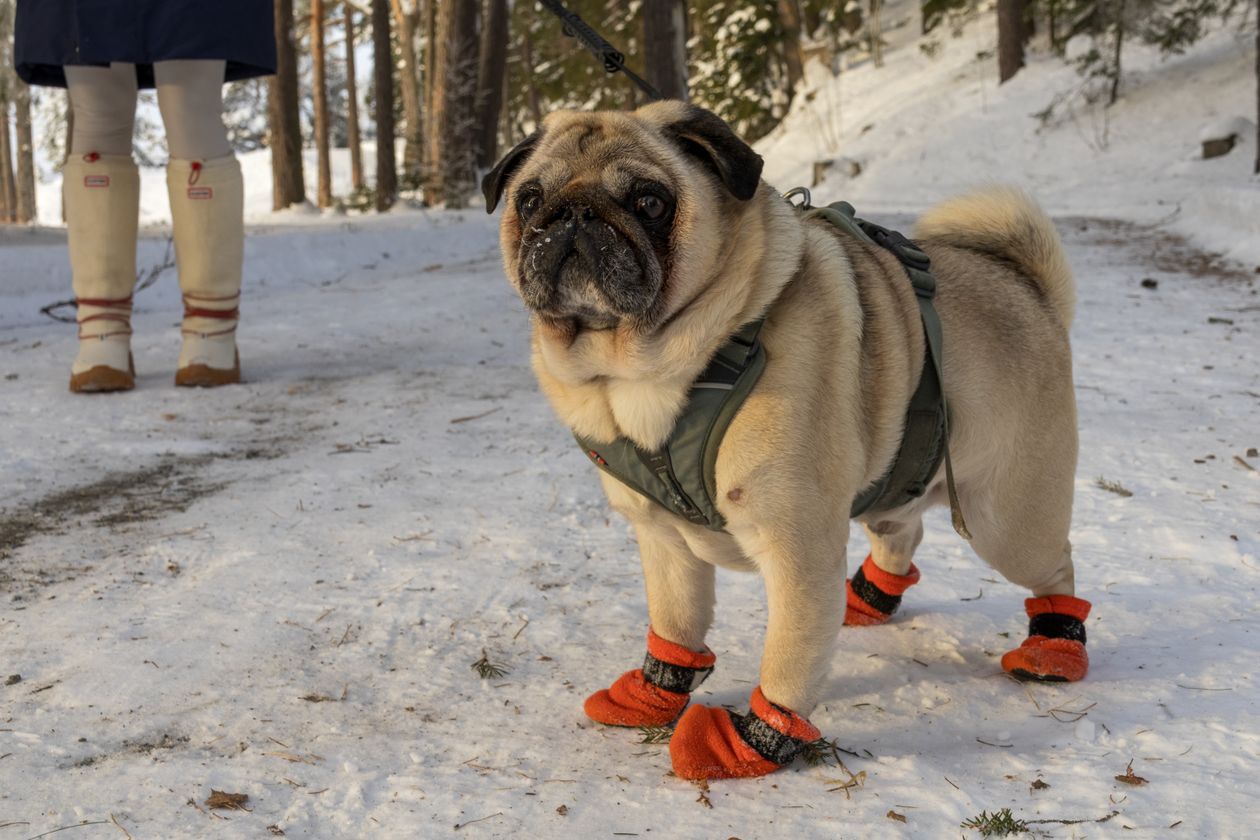
Calgary's winters create specific paw hazards that make dog boots more than a fashion accessory — they're a safety essential. The City of Calgary uses a mix of salt, sand, and chemical ice melt on roads and sidewalks that can cause painful chemical burns on unprotected paw pads.
Why Dogs Need Boots on Calgary's Roads
The chemical ice melt products used on Calgary's roads and sidewalks are the primary concern:
Park pathways generally receive less chemical treatment than city streets, but the walk to the park often crosses treated sidewalks.
How to Size Dog Boots
1. Place your dog's paw on a piece of paper
2. Mark the widest point of the paw (front and sides)
3. Measure the width in centimetres
4. Compare to the manufacturer's size chart
5. When in between sizes, go UP — too-tight boots are worse than slightly loose ones
Important: Front paws are typically slightly larger than rear paws. Some dogs need different sizes front and back.
Getting Dogs Used to Boots
Most dogs hate boots initially. The "funny walk" is normal and fades with practice.
Training approach:
1. Day 1-3: Let your dog sniff and investigate the boots. Reward with treats.
2. Day 4-7: Put boots on front paws only, for 5 minutes inside. Lots of treats.
3. Week 2: Add rear boots. Short indoor sessions with treats and play.
4. Week 3: First outdoor walk with boots. Keep it short (10 minutes) and positive.
5. Week 4+: Gradually increase outdoor boot time. Most dogs adapt fully within a month.
Alternatives to Boots
Musher's Secret Paw Wax: A wax-based barrier applied to paw pads before walks. Easier to apply than boots but less effective. Good for dogs who absolutely refuse boots. Reapply before each walk.
Post-Walk Paw Rinse: Keep a shallow tub of warm water by the door. Dip each paw after winter walks to remove salt and chemicals. This is the minimum winter paw care for any Calgary dog.