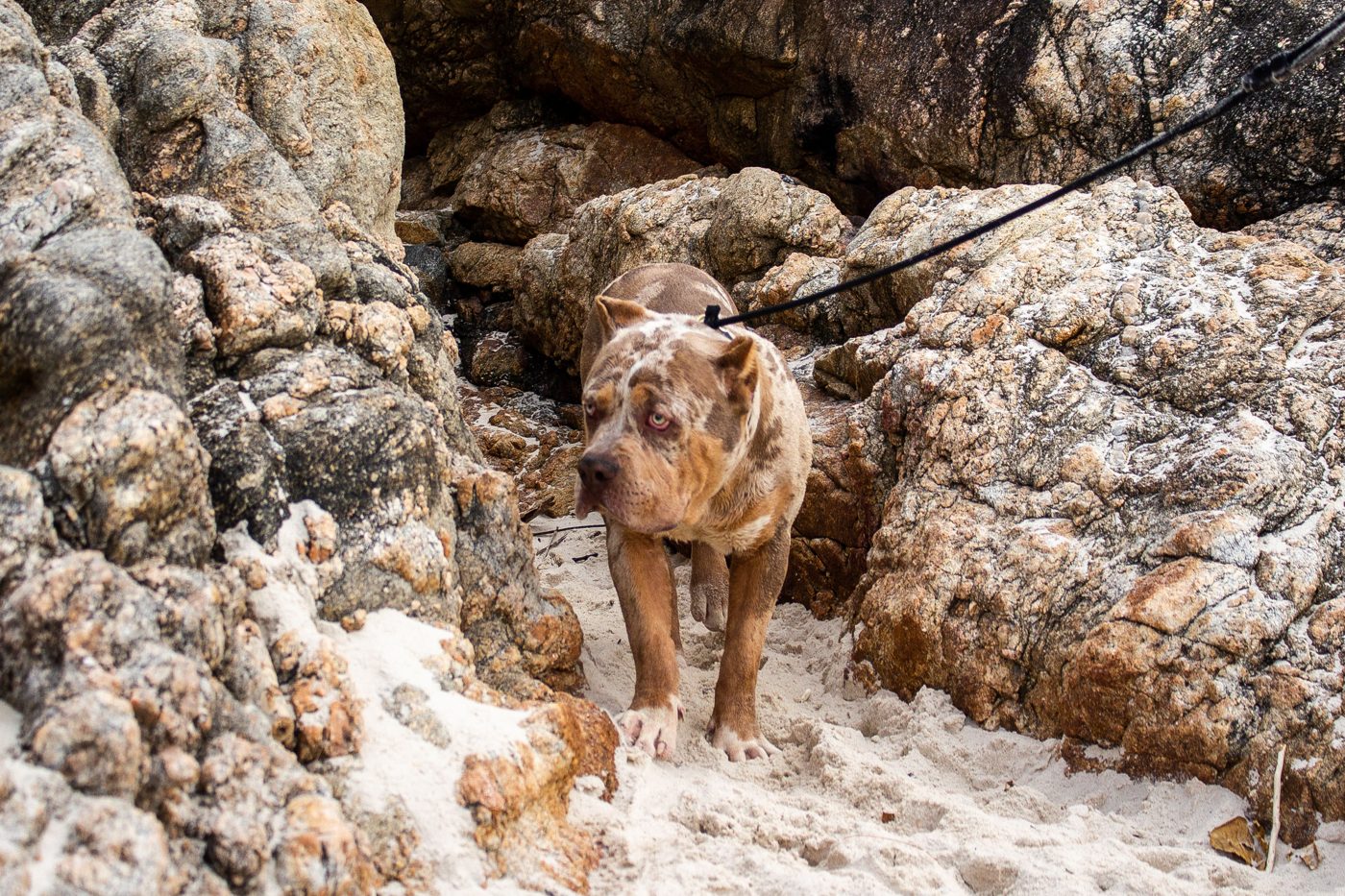
The right leash for a large dog comes down to material strength, hardware quality, and how it holds up to daily Calgary conditions — not just a listed weight rating on the package. Below is how to actually judge durability, plus the leashes worth buying in Canada in 2026.
What Makes a Leash Actually Durable for a Large Dog?
Material matters most. Thick nylon webbing holds up far better than thin cord under sustained pulling from a 30kg-plus dog, and hardware is the second most common failure point, not the strap itself. A stamped, thin metal clip can bend under a hard lunge; a carabiner-style or forged clip is what actually survives years of a strong dog testing it.
Stitching quality is the detail most owners never check until it fails. Look for reinforcement at the handle and clip attachment points specifically, since that's where tension concentrates.
How Long Should a Leash Be for a Large, Strong Dog?
4 to 6 feet is the standard, practical range for daily walks and meets Calgary's on-leash requirement of no more than two metres outside designated off-leash areas.
For recall training in open space, a longer line (15 to 30 feet, or 30 to 50 feet for more advanced work) gives a dog room to explore while you keep physical control, a genuinely useful step between full off-leash and a short walking leash.
Which Leashes Are Worth Buying in Canada in 2026?
Hands-Free Dog Leash with Zipper Pouch
A waist-worn leash that frees both hands, with a built-in zipper pouch for treats or waste bags, useful for a dog that's a steady, moderate puller rather than a hard lunger.
Heavy-Duty Carabiner Leash Hook
A reinforced clip upgrade worth pairing with any leash for a strong dog, since the clip is the single most common failure point under hard pulling.
Long Training Lead (15-30ft)
A long line built for structured recall practice in open space, giving a large dog real freedom to move while keeping you in physical control, ideal for building confidence at a fenced park like Sue Higgins before trusting full off-leash.
Does a Retractable Leash Work for a Large, Strong Dog?
Generally not recommended as a primary leash for a large or strong-pulling dog. The thin cord or tape in most retractables is a weaker failure point than fixed webbing, and the locking mechanism can fail under a hard, sudden lunge in a way a fixed leash simply can't.
A fixed leash paired with a long training line for open-field recall work, like the option above, is the safer combination for a large dog.
How Do I Know When to Replace a Leash?
Fraying at the handle or clip attachment point is the clearest sign, even if the rest of the leash still looks fine. That's where tension concentrates every single walk, and a frayed section is meaningfully weaker than it looks.
A stiff, cracking clip or a hook that doesn't snap firmly closed is a safety issue, not a cosmetic one, and worth replacing immediately, which is exactly the gap a dedicated heavy-duty carabiner clip solves without buying an entirely new leash.
A Calgary-Specific Note on Leash Material
Nylon leashes can stiffen in extreme cold, particularly below -25°C, so give a leash a quick flex check before a deep-winter walk rather than assuming it'll handle the same as it does in July.
You're required to carry a leash even inside a designated off-leash area like Sue Higgins Park, so a leash built to actually last through daily use pays for itself. Our off-leash guide covers the rest of the leash-carrying requirements that apply citywide.
Do I Need More Than One Leash?
Most owners with a large, active dog end up with two: a standard 4-to-6-foot leash for everyday walks and pathway travel, and a long training line for open-space recall work. They solve different problems, and one doesn't substitute for the other.
If your dog swims regularly at a park like Sue Higgins, a leash that dries quickly and doesn't hold odor is worth having as a third option, since a wet nylon leash left in a bag between visits can start smelling within days. Rotating two leashes, one in wash while the other's in use, is a simple fix most owners land on eventually rather than buying a single "do everything" leash.
Does Road Salt Damage Leash Hardware in Calgary Winters?
Yes, and it's the metal clip that suffers most, not the webbing itself.
City sidewalks and pathways get heavily salted through winter, and that salt residue transfers straight onto a leash clip every time it drags or brushes the ground.
A forged clip resists this better than a cheap stamped one, but neither is immune, and salt corrosion can make a clip stiffen or stick well before it visibly rusts.
Rinsing the clip and lower few inches of webbing with plain water after a salted-route walk, then letting it air dry, is a small habit that meaningfully extends hardware life over a Calgary winter.
Do Chinooks Affect Leash Durability?
Indirectly, yes, through the repeated hot-cold cycling more than any single temperature.
A leash that went stiff during a cold snap shouldn't be yanked straight or force-flexed the moment a chinook pushes temperatures up, since sudden flexing of cold-hardened nylon is when hairline cracks in the webbing actually start.
Letting a stiff leash warm up gradually indoors before heavy use is a small step that avoids stressing the material right at the temperature swing itself.
Updated July 2026