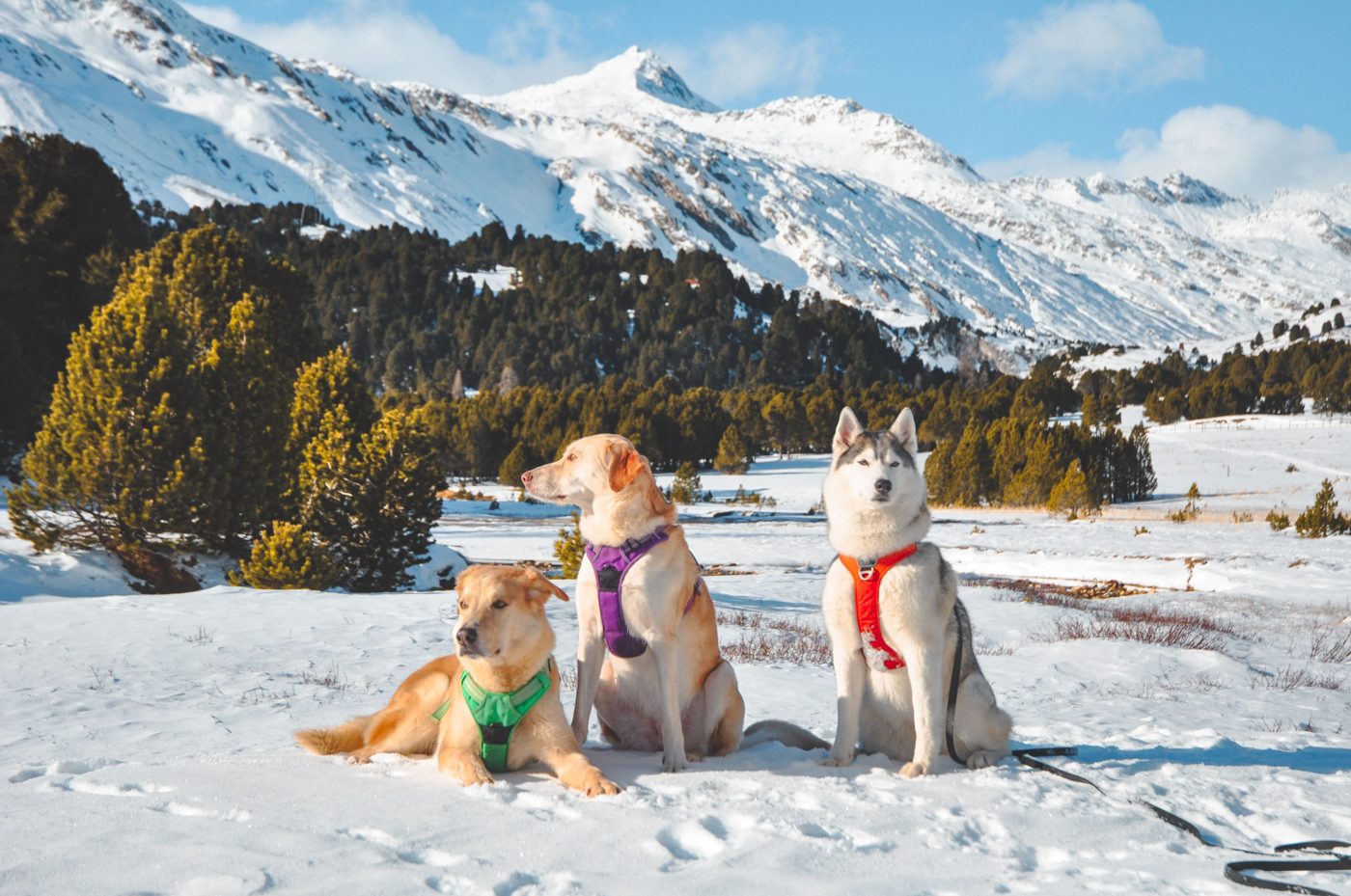
Calgary winter hits hard, with chinook swings that can move the temperature 20 degrees in a day and cold snaps that drop well past -30°C. This checklist gets you and your dog ready for all of it.
What Temperature Is Too Cold for a Dog to Walk in Calgary?
There's no single safe number, since it depends heavily on your dog's size and coat.
Age and health matter as much as breed. Puppies, senior dogs, and dogs with arthritis or thin body condition run colder than a healthy adult of the same breed, so shorten every one of the ranges above if any of those apply.
What Winter Gear Does My Dog Actually Need in Calgary?
Our complete winter essentials guide goes deeper on all of this, and our dog boots guide and dog jackets guide cover specific product picks by size and coat type.
How Do I Get My Dog Used to Wearing Boots?
Start now, not on the first cold day. Boot training genuinely takes 2 to 4 weeks of daily short practice sessions to get a dog walking normally in them.
Put the boots on for a few minutes at a time indoors first, with treats and praise, before ever expecting your dog to walk normally outside in them.
Most dogs go through an exaggerated high-step "boot walk" for the first several sessions. That's normal and it resolves with repetition, not by giving up on boots after one bad attempt.
Do I Need to Adjust Training in Winter?
Yes, in a few specific ways.
Reinforce recall more than usual, since shorter daylight hours mean more of your dog's off-leash time happens in low light, when a missed recall is harder to recover from quickly.
If your dog isn't used to boots yet, this is the season to start that training, not April.
Build in indoor commands and mental enrichment for the days genuinely too cold for a real walk, since a bored dog stuck inside for days at a stretch gets restless fast.
Practice loading into the car carefully on icy driveways; a slip during a routine car-loading moment is one of the more common minor winter injuries.
What Are My Options on Days Too Cold to Walk?
Indoor dog parks like Petfinity and Hooch & Co. are built exactly for this, offering off-leash play without the exposure.
Identify a doggy daycare backup in advance for the days you genuinely can't manage a walk yourself, rather than scrambling to find one during a cold snap.
Stock up on puzzle toys and enrichment feeders before winter hits, since a stuffed, frozen Kong or a slow feeder can substitute for real mental tiredness on a housebound day.
Fifteen minutes of structured training indoors is roughly equivalent, mentally, to thirty or more minutes of a normal walk, which helps close the gap on the worst weather days.
Reflective and LED gear from our night-walk safety guide matters even more in winter, since so much of the season's dog-walking happens after dark.
What Should I Get Checked at the Vet Before Winter?
A pre-winter vet visit is worth booking every year, not just when something seems wrong.
Ask specifically about joint health, since arthritis and general joint stiffness noticeably worsen in cold weather, and an early conversation about supplements or a modified exercise routine is easier than reacting once your dog is already struggling.
Get a paw pad check while pads are still in good condition heading into the season, so you have a baseline for comparison once salt and cold start taking a toll.
Weigh your dog. Winter weight gain is common once outdoor exercise drops, and catching a slow gain in November is much easier to manage than catching it in March.
Confirm flea and tick prevention is current. Calgary's winters are cold, but mild stretches and chinooks mean ticks can survive longer into the season than most owners expect.
How Do Chinooks Affect Winter Dog Walks in Calgary?
Calgary's chinook winds can swing the temperature 15 to 20 degrees in a matter of hours, which creates its own set of problems.
A sudden warm-up melts snow and ice into slush, which then refreezes overnight into genuinely dangerous black ice on sidewalks and pathways, often in patches that look dry until you're already on them.
Keep boots and traction gear on hand even during a warm chinook stretch, since the freeze that follows is often worse footing than the cold snap it replaced.
Rapid temperature swings are also hard on a dog's system the same way they are on people's joints, so don't assume a chinook day means a free pass for a much longer or more intense walk than usual.
What Are the Signs of Frostbite or Hypothermia in Dogs?
Know these before you need them, since early signs are easy to miss on a dog already wearing a coat and boots.
Frostbite typically shows up first on ears, tail tip, and paw pads: pale or grey skin, unusual coldness to the touch, and later swelling or blistering as it thaws. It's not always obvious mid-walk since affected skin can look deceptively normal until it warms up at home.
Hypothermia signs include intense shivering that doesn't stop once you're back inside, lethargy, stumbling, and, in severe cases, confusion or collapse. Any of these after a walk warrants getting your dog warm immediately and calling your vet.
Dogs that stop moving forward, lift a paw persistently, or try to sit down mid-walk are usually telling you they're too cold right now, not being stubborn, so treat that as a signal to head home rather than push through it.
Is It Safe to Leave My Dog in the Car While Warming It Up in Winter?
Briefly, yes, but don't make a habit of leaving a dog unattended in a running car for an extended period, since carbon monoxide risk and the car's own temperature swing as it warms up are both real concerns.
If you're warming the car up before a drive to a park, a few minutes with a dog secured and the car actively running is generally fine; a long errand stop with the dog left in a parked, cooling car afterward is not, even in winter, since a cooling car can drop back to outdoor temperature faster than most owners expect.
Which Calgary Dog Parks Handle Winter Best?
Not every park is equal once the temperature drops.
Sue Higgins Park stays usable through winter thanks to its fence and wooded sections that offer real wind shelter. Auburn Bay Dog Park is lit until 11 PM and fully fenced, useful for after-work visits once it's already dark. Edworthy Off-Leash Dog Park's forest canopy blocks a meaningful amount of wind compared to open, exposed parks. East Village Dog Park's artificial turf and downtown shelter make it a solid choice on a day you don't want to deal with snow and ice underfoot at all.