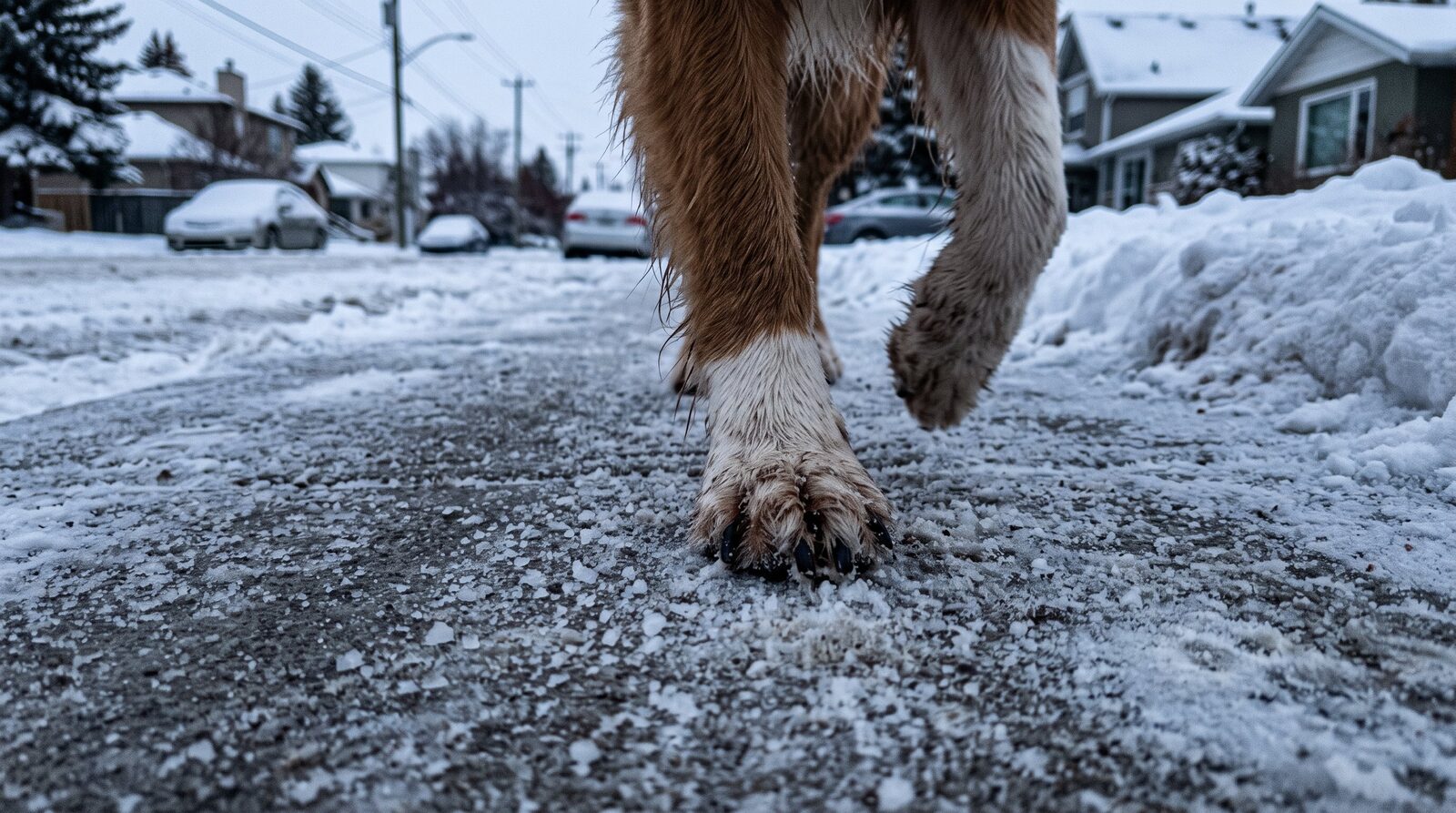
Ice melt is everywhere on Calgary sidewalks from November through March, and it's a genuine, common cause of paw injuries and stomach upset in dogs every winter, not a rare or overstated risk.
Why Is Ice Melt Actually Bad for Dogs?
Most sidewalk and driveway ice melt contains sodium chloride, calcium chloride, magnesium chloride, or potassium chloride. These salts dry out and crack paw pads on contact, and the jagged crystal edges cause direct mechanical irritation on top of the chemical effect.
If your dog licks their paws after a walk, which most dogs do reflexively, they can ingest enough salt to cause drooling, vomiting, or diarrhea. Emergency vet clinics see a real seasonal spike in salt-related cases after major snow events, when ice melt use across the city jumps.
What Are the Signs of Salt Damage to My Dog's Paws?
Check your dog's paws after every winter walk, not just when they're already showing discomfort, since catching mild irritation early is far easier to manage than a fully cracked, painful pad.
What Are the Signs of Ice Melt Ingestion, Not Just Paw Contact?
Drooling, vomiting, or diarrhea are the most common early signs after a dog licks salt off their paws or eats treated snow directly. In more serious cases, particularly with calcium chloride ingestion, oral or stomach ulceration is possible, and large ingestions can cause elevated blood sodium, which can lead to neurologic symptoms like tremors or disorientation.
If your dog shows more than mild, brief drooling, or if you suspect they ate ice melt directly from a bag or spilled pile, treat it as a same-day vet call rather than a wait-and-see situation.
How Do I Prevent Ice Melt Damage to My Dog's Paws?
Wipe or rinse your dog's paws with a damp cloth or pet-safe wipes after every winter walk, paying attention to the webbing between toes where residue collects and clings.
Dog boots are the most complete protection, physically blocking contact with salt, ice, and sharp debris hidden under snow. If your dog won't tolerate boots, paw wax creates a protective barrier layer that's easier for many dogs to accept, though it needs reapplying more often than boots need replacing.
Keep walks shorter on heavily salted routes, and where you have a choice, steer toward routes with less treated sidewalk, like a fenced park interior over a busy commercial strip.
What Should I Use on My Own Sidewalk and Driveway?
Most commercial de-icing products are not actually safe for pets, according to veterinary sources; the "ice melt" default on most store shelves still contains potassium, magnesium, or calcium chloride regardless of how it's marketed. Pet-safer options, generally labeled chloride-free and based on ingredients like urea, glycols, or calcium magnesium acetate, are gentler on paws and lower risk if ingested, though "pet-safe" doesn't mean entirely risk-free in large quantities. Safe Paw is one specific chloride-free product veterinarians commonly point to by name if you want a straightforward option rather than reading every ingredient label yourself.
Follow package directions for amount used per square foot; more product doesn't mean more effective, just more residue and risk.
Keep in mind that even if your own walkway uses a gentler product, most of Calgary's public sidewalks, city crews, and neighbouring properties likely don't, so paw protection habits still matter on any walk beyond your own property.
How Do I Treat Minor Paw Irritation at Home?
For mild dryness or redness without open sores, a pet-safe paw balm applied after a thorough rinse and dry can help the pads recover between walks. Keep your dog from licking it off immediately, since some balms need a few minutes to absorb.
For cracked, bleeding, or clearly painful paws, this moves past home care into a vet visit, since an open crack is a genuine infection risk, not just cosmetic damage.
A Calgary-Specific Note on Winter Route Planning
Sue Higgins Park and other fenced off-leash parks are a genuinely lower-salt option compared to walking busy commercial sidewalks downtown or along major roads, since park interiors generally aren't treated with ice melt the way public walkways are. If salt exposure is a particular concern for your dog, weighting more of your winter walking toward park interiors rather than street routes is a simple, practical fix.