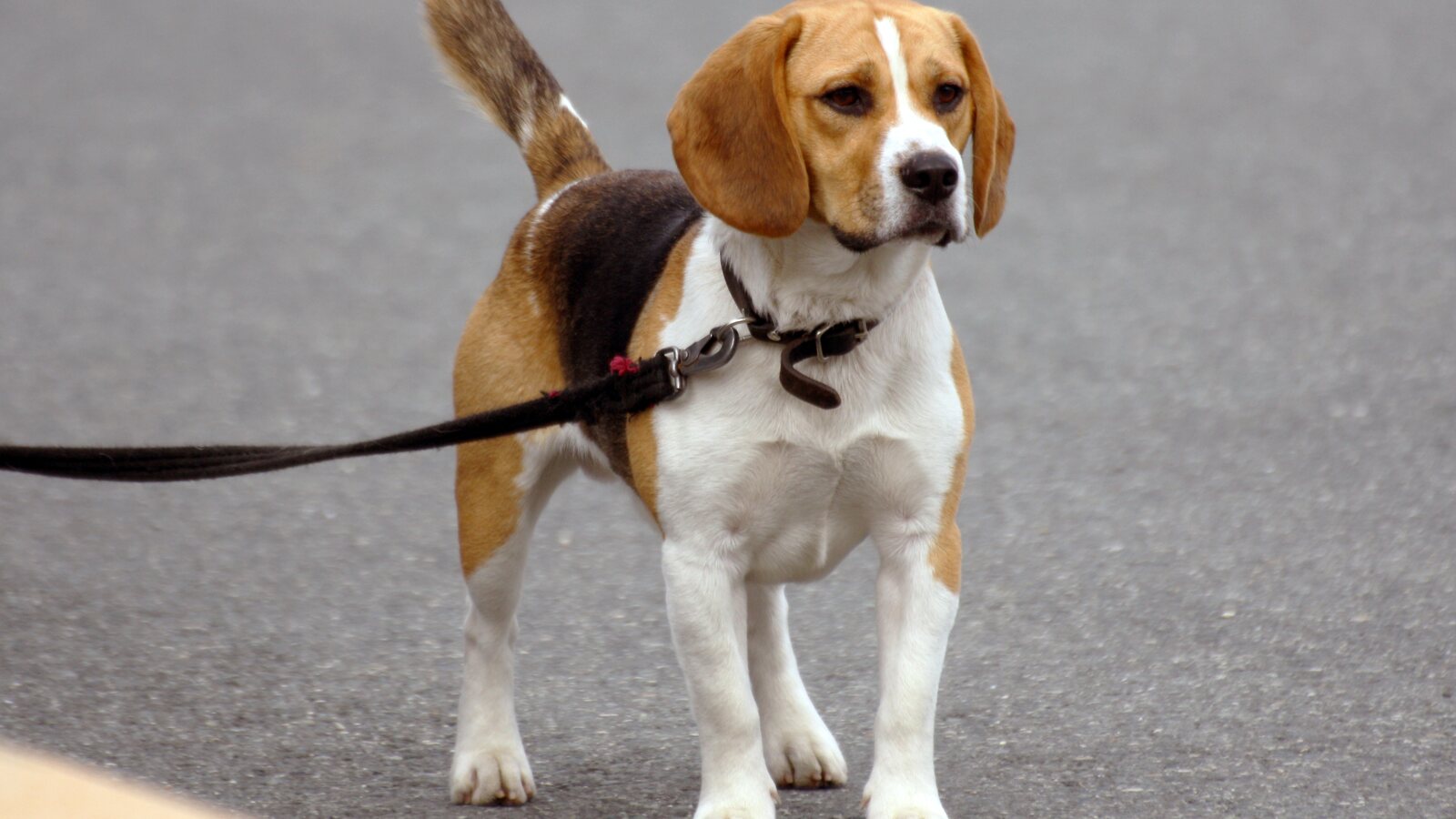
Not every dog belongs at a big, busy off-leash park, and that's fine.
If your dog is reactive, fearful, or still building confidence around other dogs, the right move isn't to avoid off-leash time altogether.
It's picking a quieter park, a quieter time, and a plan for the first visit, which is exactly what this guide covers.
Is My Dog Actually Ready for an Off-Leash Park?
Readiness isn't about breed or age, it's about how your dog responds to other dogs at a distance.
A dog that's ready can notice another dog approaching and stay loose and relaxed, or come back to you when called even with distractions nearby.
A dog that isn't ready yet tends to freeze, bark repeatedly, lunge, or completely ignore you the moment another dog appears.
Neither response is a character flaw.
It just means the dog needs a lower-pressure environment to build the skill in, which a quiet park is genuinely good for.
What Body Language Signals Should I Watch For?
Learning a few specific signals gives you a much earlier warning than waiting for barking or lunging.
Lip licking, yawning outside of tiredness, and a tucked tail are common early stress signals a dog shows well before an outright reaction.
"Whale eye", where you can see the whites of your dog's eyes as they stare sideways at something, is another reliable early sign of discomfort.
A stiff, frozen body or a tail that goes suddenly still after wagging is often the last signal before a bark or lunge, not a random pause.
Catching any of these early gives you time to add distance calmly, before your dog feels like barking is the only option left.
What Does "Reactive" Actually Mean?
Reactive simply means a dog has a strong, often loud response to a trigger, most commonly another dog, that's out of proportion to the actual threat.
It's usually rooted in fear or overstimulation, not aggression, even though barking and lunging can look aggressive from the outside.
A nervous or under-socialized dog can show the same behaviours without being formally "reactive" in the training sense.
Either way, the practical fix is the same.
Lower the intensity of the environment before asking for more.
How Do I Pick a Quieter Calgary Off-Leash Park?
Look for three things: a fenced boundary, a smaller footprint, and a time of day with fewer dogs.
A fenced park matters most for a dog still building recall, since it removes the risk of a bolt toward a street or a trigger.
Smaller parks are naturally quieter than Calgary's big regional off-leash areas simply because fewer dogs show up at once.
Our full off-leash guide to Calgary covers the city's parks broadly if you want the wider picture before narrowing down to a quieter pick.
Four Quieter Fenced Parks Worth Trying in Calgary
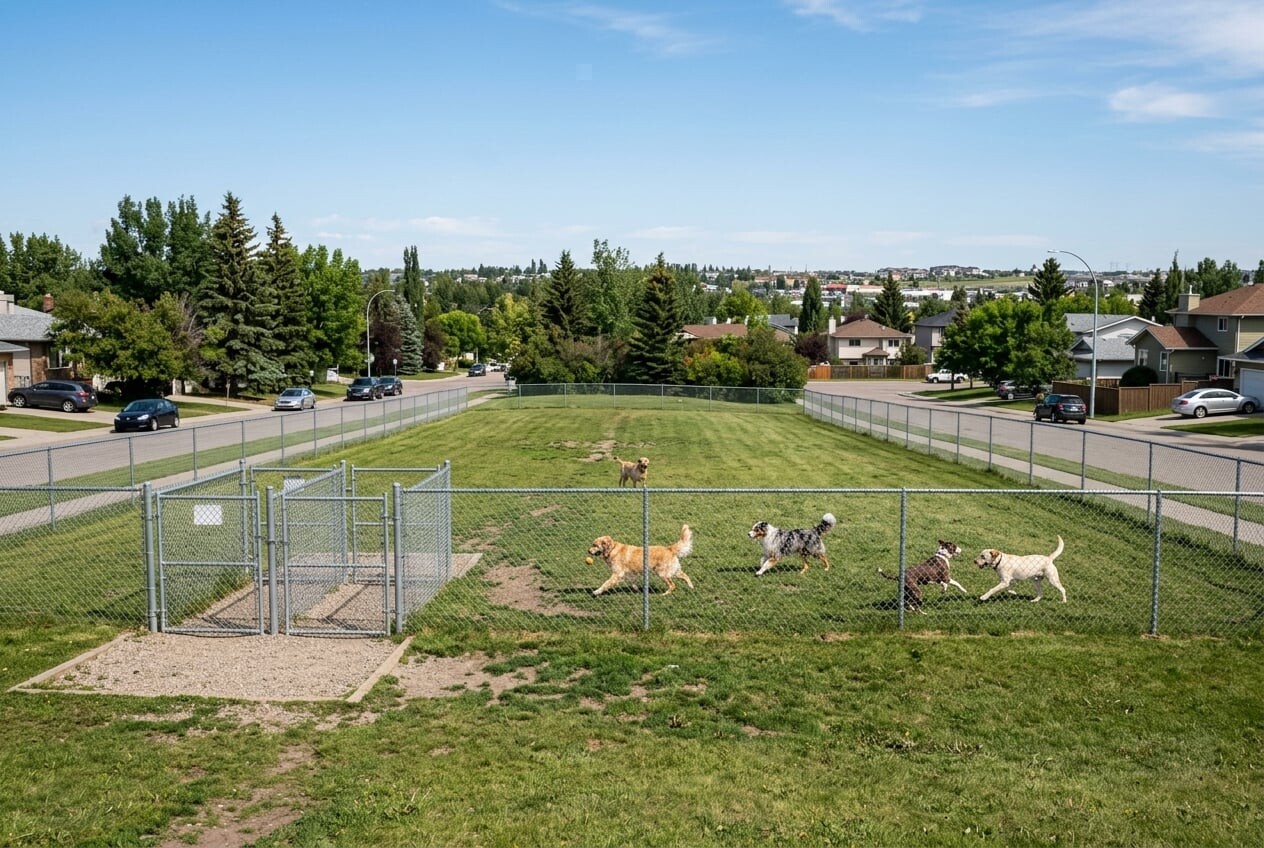
These are smaller, fenced, neighbourhood-scale parks rather than the city's big flagship off-leash areas, which makes them a more forgiving place to start.
Connaught Off-Leash Dog Park sits in the Beltline and offers a fenced, contained space with grass and gravel paths. It's an urban, central location, so it works best at off-peak hours rather than as a quiet retreat in itself.
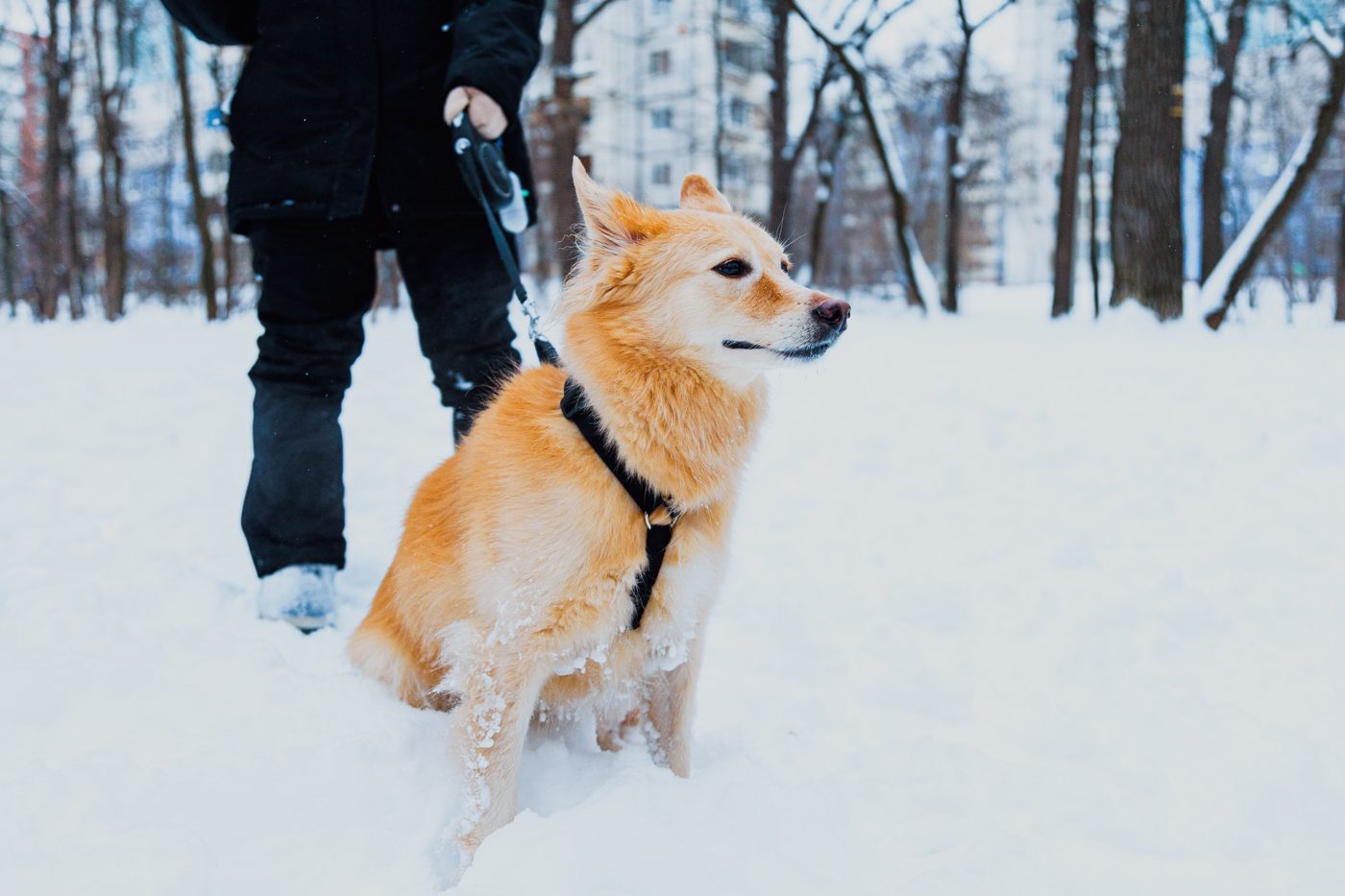
West Hillhurst Off-Leash Area has flat, open grass with good sightlines, which matters for a reactive dog since you can see another dog approaching well before they're close. The fencing here is described as strategic and secure, built around a genuinely accessible, community-scale layout.
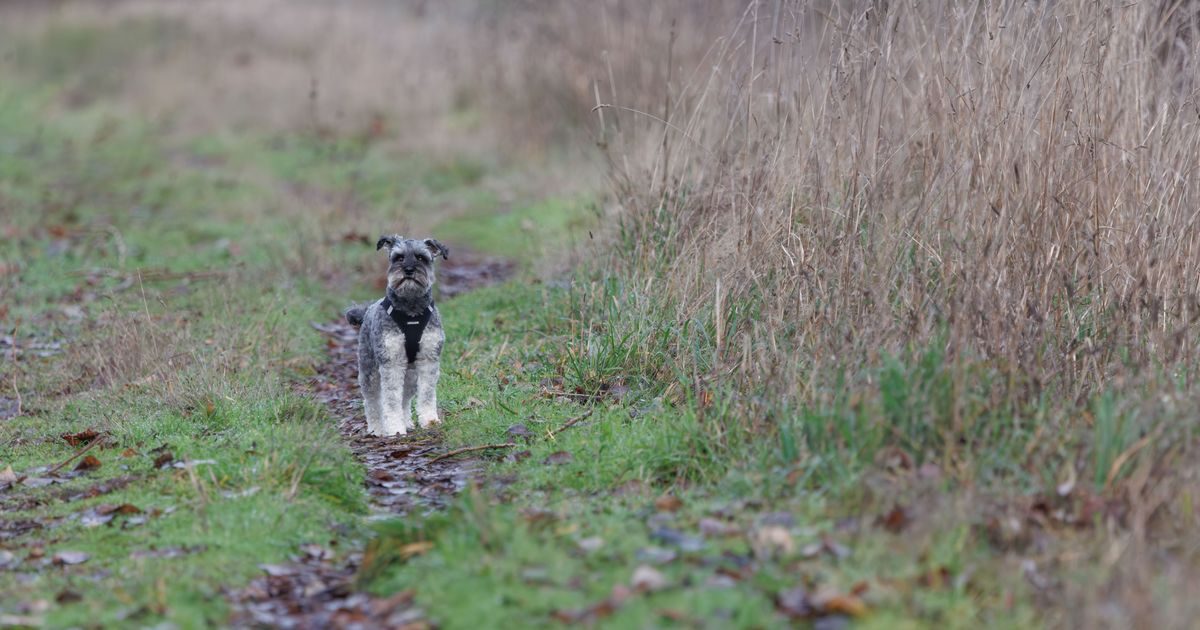
Willow Park Off-Leash Area is fully fenced and sits in an established inner-city community, giving owners a contained space without a busy street nearby to worry about. It's a straightforward, low-drama park rather than a destination that draws crowds.
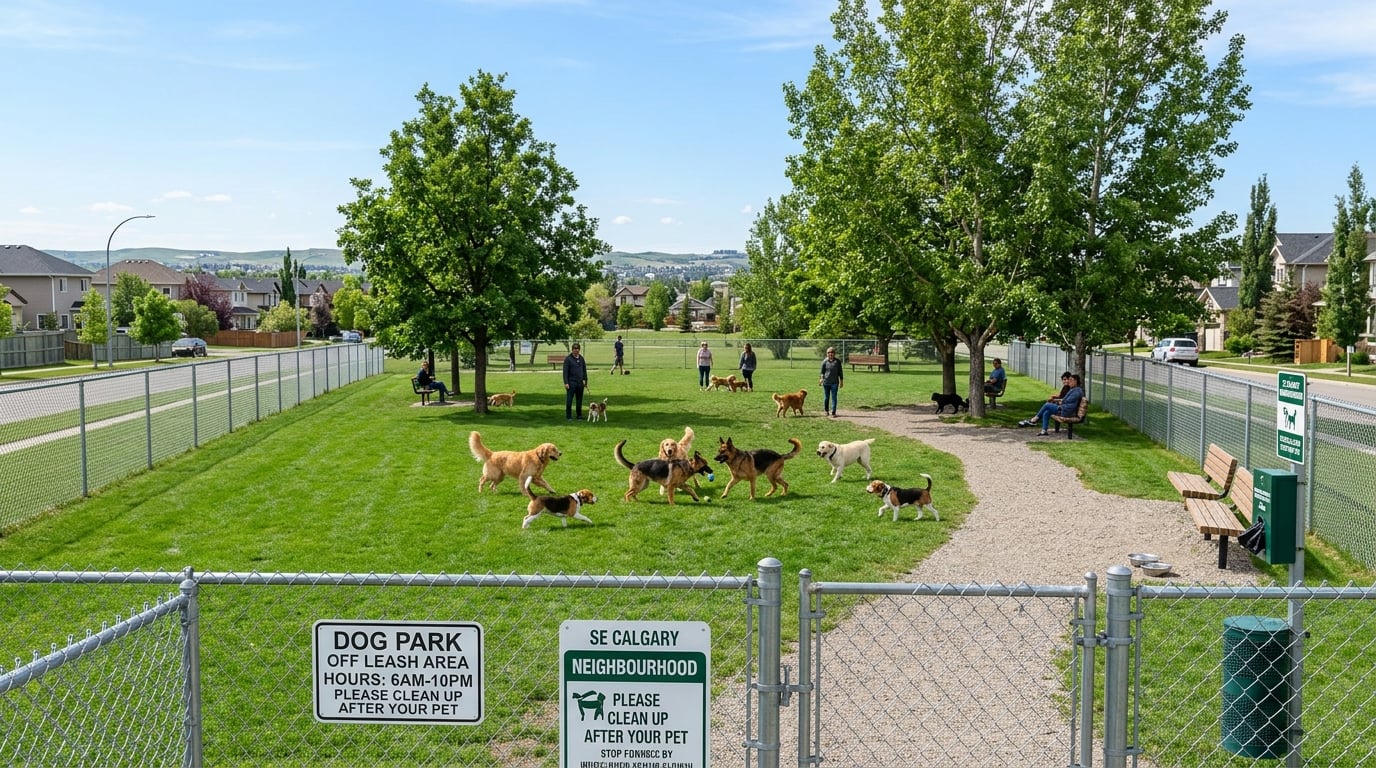
Marlborough Park Off-Leash Area uses chain-link fencing around a community-scale site in Calgary's northeast, and it's genuinely built for dogs that need a secure space or owners who are still working on off-leash reliability. That framing matches this guide's whole purpose almost exactly.
What Time of Day Is Quietest at a Calgary Dog Park?
Early morning right after sunrise and mid-afternoon on a weekday are consistently the lowest-traffic windows at most Calgary off-leash parks.
Weekday evenings and any time on a weekend, especially a sunny one, bring the highest dog density and the least predictable mix of temperaments.
If your schedule allows it, a weekday midday visit gives a nervous dog the best odds of having long stretches with no other dogs in sight at all.
How Do I Introduce My Dog to a New Park Safely?
Start outside the fence, not inside it.
Let your dog observe the park from a distance first, on a leash, and only go in once they're calm rather than fixated on what's happening inside.
On the first few visits, stay near the entrance and keep the visit short.
Five to ten minutes is plenty, so the experience ends on a good note rather than dragging on until your dog gets overwhelmed.
Our first-time dog park guide covers the broader entry routine if this is genuinely your dog's first off-leash experience of any kind.
What Do I Do If My Dog Reacts Badly to Another Dog?
Stay calm yourself first, since a tense handler makes a reactive dog worse, not better.
Create distance immediately by walking away at an angle rather than turning your back and retreating in a straight line, which can look like fleeing to some dogs.
Avoid yanking the leash or shouting, since both add stress on top of whatever triggered the reaction in the first place.
Once your dog is calm again, decide whether to try re-entering at a distance or simply end the visit there.
Treat either choice as a completely reasonable outcome.
Should I Just Avoid Off-Leash Parks Entirely?
Not necessarily, but it's worth being honest that some dogs do better with structured leash walks, a private yard, or one-on-one playdates than with any off-leash park, however quiet.
If your dog shows no improvement after several calm, well-timed visits to a quiet park, or if the reactions are intensifying rather than easing, that's a genuine signal to bring in a certified trainer or veterinary behaviourist rather than keep testing park visits alone.
Our guide to choosing the right Calgary dog park covers the broader decision of whether a given park, or an off-leash park at all, actually fits your specific dog.
Building Off-Leash Confidence Over Time
Progress with a reactive or nervous dog is rarely a straight line, and a bad visit doesn't erase the good ones before it.
Track what actually helped, whether that's a specific time of day, a specific park, or a specific distance from other dogs, and keep repeating what works rather than chasing variety for its own sake.
The goal isn't necessarily a dog that loves every park in Calgary.
It's a dog that can calmly handle the parks and situations that matter to your actual routine.