Ohio Buckeye trees growing in Calgary's Cambrian Heights dog park produce nuts that are toxic to dogs.
The City of Calgary knows about the trees and has decided not to remove them.
It says the risk to pets is low.
Here's what happened, what the toxin does, and what to watch for at this and other Calgary parks.
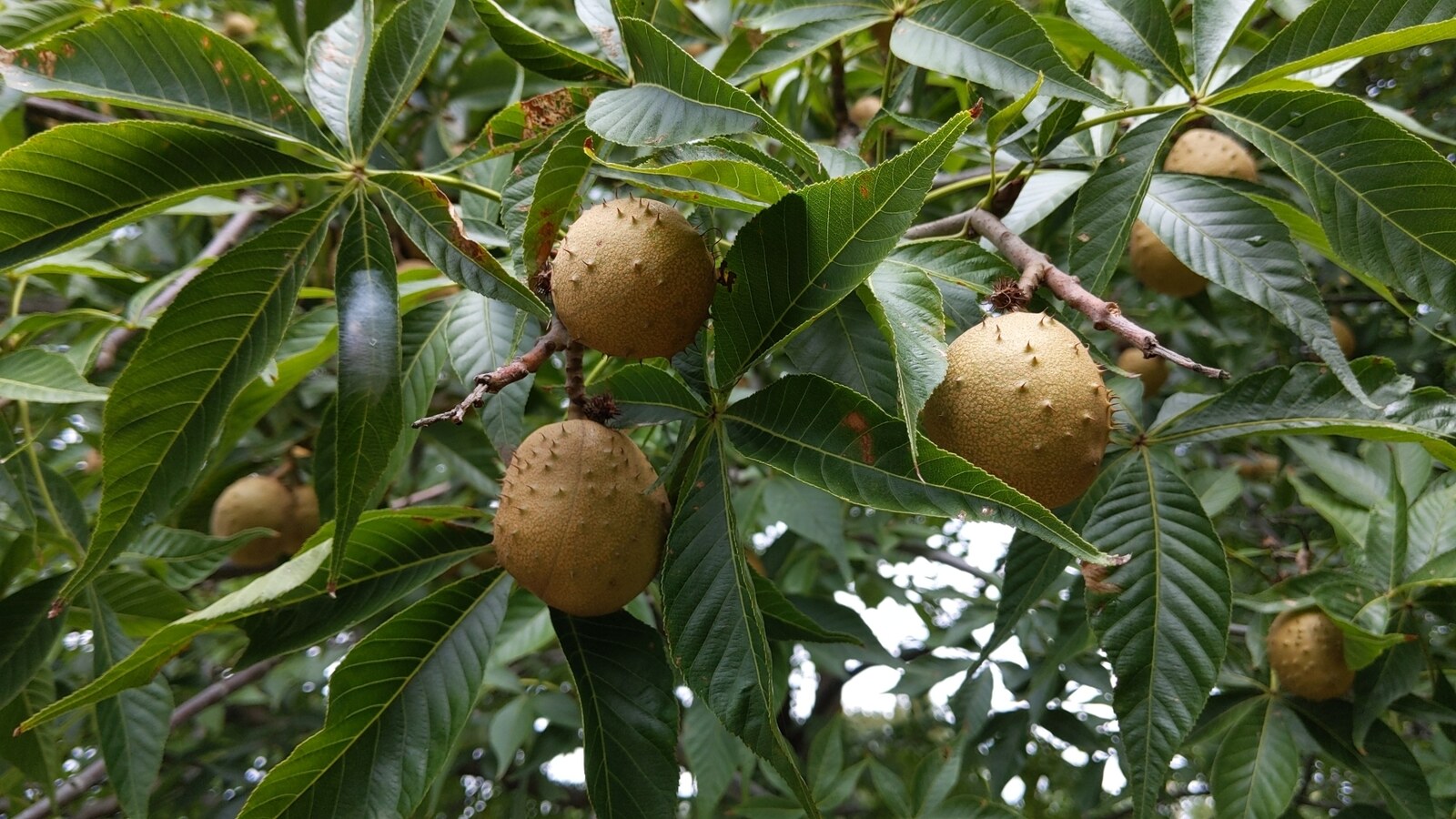
Photo: Maxime Laterreur, via Wikimedia Commons (CC BY-SA 4.0).
A Calgary Dog Park Has a Tree Problem, and It's Been Known About for Two Years
A tree species planted by the City of Calgary is causing concern in northwest Calgary.
The community affected is Cambrian Heights.
The Ohio Buckeye tree is valued for its shade and its seasonal colour change.
The nut it produces is toxic to pets if eaten.
Several of these trees are growing at Cambrian Heights Area 1 and Cambrian Heights Area 2.
They're producing nuts right now.
This isn't a new discovery either.
Residents say they've been raising the issue with the city for roughly two years.
What the Community Is Saying
Daryl Connolly is president of the Cambrian Heights Community Association.
He says residents have reported the trees as a potential hazard to their dogs before.
The association passed that concern on to the city's parks department.
The response, according to Connolly, was that city tree-planting specialists are aware of the issue.
But he says they don't consider it a major concern, or one worth acting on.
What the Toxin Actually Does
If eaten, Ohio Buckeye nuts can cause vomiting, diarrhea, or more serious medical issues in dogs.
Veterinarian Julie Schell of Bow Bottom Veterinary Hospital says planting decisions need more thought than they're currently getting.
She points out that a tree can look completely safe for most of the year.
Then it becomes a real hazard during a specific window, like fall harvest.
That's when leaves and nuts pile up together on the ground.
Her recommendation is straightforward.
Ecologists, agriculturists, and veterinarians should be involved in these planting decisions together, not after the fact.
What the City of Calgary Says
In a statement to Global News, the city said one of its urban forestry goals is promoting biodiversity through a wide variety of tree species.
The city acknowledges that some of those species carry naturally occurring toxic traits.
But it says the likelihood of a pet actually being harmed is very low.
Its position is that pet owners share the responsibility here.
Stay vigilant, and discourage pets from eating anything they find in public green space.
What This Actually Means for Your Dog
Here's the practical read, cutting through the back and forth.
The city isn't wrong that most leashed dogs walk right past a buckeye tree.
They'll never eat enough of the nut to get seriously sick.
The spiky outer husk isn't especially appetizing.
A dog would typically need to eat a meaningful quantity to see the worst outcomes.
But low likelihood isn't zero risk.
This is exactly the kind of hazard that's easy to miss if you don't know it's there.
If you frequent the Cambrian Heights off-leash areas, or any Calgary green space with buckeye trees, watch the ground closely.
Late summer through fall is when the nuts are most visible on the ground.
Enthusiastic ground-sniffers, puppies, and known food-scroungers are the dogs actually at risk here.
The average leashed walker isn't.
What to Do If Your Dog Eats One
Call your vet right away if you know or suspect your dog has eaten an Ohio Buckeye nut.
Schell says vets can sometimes talk you through next steps over the phone.
But most cases still end up needing a clinic visit to induce vomiting.
Don't wait to see if symptoms show up first.
If it's safe to do so, bring a photo or a piece of the husk with you to the vet.
That helps confirm what your dog actually ate, rather than guessing.
How to Spot the Tree
Ohio Buckeye trees have palm-shaped leaf clusters of five leaflets.
They produce a round, spiky-husked nut in late summer and fall.
If you're not sure whether a tree at your regular dog park is a buckeye, a quick photo comparison is worth doing.
You can also ask your community association.
The city has confirmed these trees are actively being planted across Calgary's urban forest as part of its biodiversity strategy.
Is This Just a Cambrian Heights Problem?
Not necessarily.
The city's own statement frames Ohio Buckeye as part of a citywide biodiversity strategy, not a one-off planting in a single community.
That means the same species could be growing in other Calgary parks and boulevards too, not just the two off-leash areas in Cambrian Heights.
If your regular dog park has a mature deciduous tree with five-leaflet leaves and spiky nuts showing up in late summer, treat it the same way, regardless of which neighbourhood you're in.
The Bigger Picture
This isn't the only hidden hazard Calgary dog owners should know about.
We've also covered the rise of coyote tapeworm in Calgary's off-leash parks, another risk that isn't always obvious at first.
If you're building a mental checklist of seasonal park hazards, our Off-Leash Guide to Calgary is a good place to start.