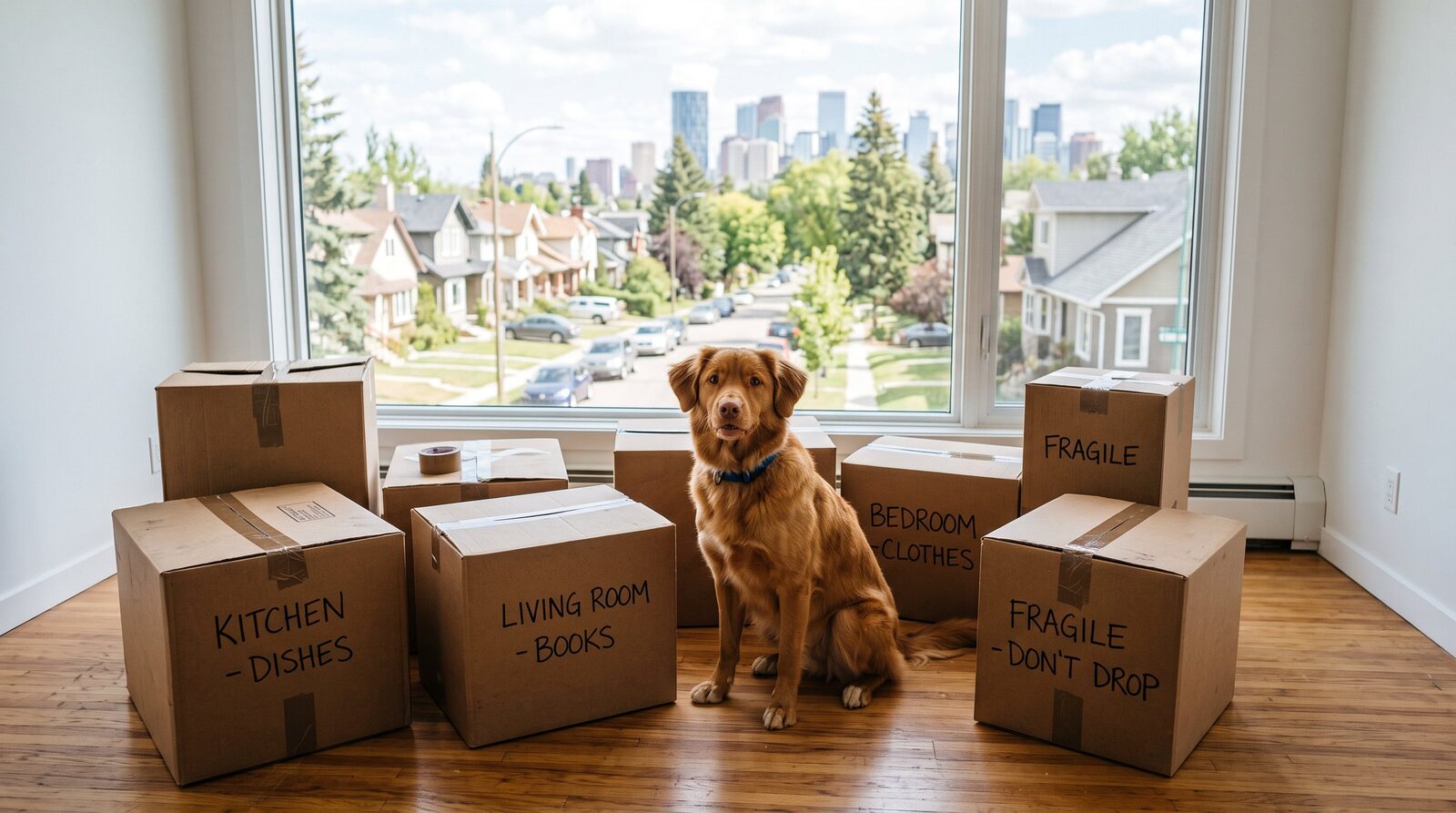
Moving to Calgary with a dog means sorting out licensing, finding a vet, and picking a neighbourhood that actually works for daily dog life, not just commute time. Here's what to handle, and in what order.
Step 1: License Your Dog Within 30 Days
Every dog three months or older living in Calgary needs a current City licence, and this is one of the first administrative tasks worth handling after a move. It costs $45 per year for a spayed or neutered dog, $71 for an unaltered dog, and can be done online, by phone through 311, or in person at the Animal Services Centre.
If your dog already has a microchip or tattoo from your previous city, worth knowing: Calgary doesn't require them to wear the physical licence tag on their collar, though the licence itself must still be current in the city's system.
Bring your dog's existing vaccination records from your previous vet, since most new Calgary vets will want to see them at your first appointment regardless of where you're licensing.
Can I Bring My Dog on Calgary Transit?
Yes, leashed dogs are allowed on Calgary Transit, including the C-Train and buses, at no extra cost. This is genuinely useful if you're moving without a vehicle right away, since it means your dog doesn't limit which parks or neighbourhoods are practically reachable while you get settled.
Step 2: Find a Vet Before You Need One
Don't wait for an emergency to start looking. Ask for recommendations in local Calgary dog owner Facebook groups or Reddit communities, and book a general wellness visit within your first few weeks specifically to establish your dog as an existing patient, not a first-time emergency walk-in.
Bring complete records from your previous vet, including any ongoing medication history, allergies, or chronic conditions, so your new vet isn't starting from zero.
Step 3: Pick a Dog-Friendly Neighbourhood
Rental and buying decisions both benefit from thinking about dog life specifically, not just square footage and commute.
The Beltline is a strong pick for urban, walkable living with pet-friendly patios throughout, and Connaught Off-Leash Dog Park right in the neighbourhood.
Altadore and South Calgary suit an active, outdoor-focused lifestyle, close to River Park and its pathway and river access.
Bridgeland and Kensington both offer walkable layouts with green space and river access nearby, and a strong concentration of dog-friendly cafes and patios.
Bowness gives you direct access to Bowness Park's extensive pathway network. Suburban communities like Cranston and Auburn Bay tend to have more single-family rentals with actual yards, along with Auburn Bay Dog Park close by.
Mission is a quieter, still-walkable alternative to the Beltline, with Elbow River pathways nearby.
More broadly, Calgary's northwest and southeast quadrants are generally noted as the strongest areas for pet owners specifically, since older neighbourhoods in both areas tend to allow more pet-friendly rentals and come with bigger yards than newer, denser developments closer to downtown.
What Should I Know About Renting With a Dog in Calgary?
Finding pet-friendly housing is genuinely the hardest part of moving to Calgary with a dog: despite well over half of Calgary households owning a pet, fewer than 10% of lower-cost market rentals allow animals, which creates real competition for the pet-friendly listings that do exist. Rentfaster.ca is worth using specifically for its "pet-friendly" filter, rather than searching general listing sites and hoping.
Read the pet clause in any lease carefully before signing, not after. Alberta landlords can legally charge a one-time, typically non-refundable pet fee (commonly $200 to $500), plus a separate refundable pet damage deposit (up to half a month's rent).
Breed and size restrictions are common and vary building to building. A 15kg or 20lb weight limit shows up often enough to specifically ask about before falling in love with a listing, and some buildings restrict specific breeds outright.
Some landlords require proof of tenant liability insurance before approving a pet, particularly for larger dogs. Having a "pet resume" ready, your dog's age, breed, weight, training, vaccination records, a photo, and references from a previous landlord, genuinely helps your application stand out in a competitive rental market.
If you're facing a housing gap with a pet in tow, Calgary Humane Society's Emergency Boarding Program provides temporary pet care for people dealing with housing insecurity or crisis, worth knowing about even if you don't expect to need it.
Do I Need to Worry About Bringing My Dog Across Provinces or From the US?
Within Canada, moving provinces with a dog doesn't require any special permit or process, just proof of current rabies vaccination if asked. Moving from the US into Alberta requires a rabies vaccination certificate showing the vaccine was given by a licensed veterinarian, and the dog should be at least three months old at time of vaccination.
If you're relocating internationally, requirements vary significantly by country of origin, and it's worth contacting the Canadian Food Inspection Agency directly rather than relying on general advice, since rules change and vary by specific circumstances.
What Should I Do in My First Week in Calgary With a Dog?
License your dog, book that first vet visit, and find your closest fenced off-leash park for a controlled, low-stress introduction to the city rather than diving straight into a large unfenced natural-area park like Nose Hill.
Our first-time dog park tips cover exactly this kind of first-visit approach, and the complete parks directory lets you find the closest option to your new address by quadrant.
What's Different About Calgary Compared to Where I Might Be Moving From?
The scale of the off-leash system is the biggest adjustment for most new Calgarians: over 150 public off-leash areas is significantly more than most Canadian cities offer, which means genuinely excellent options wherever you end up living, but also a real decision-paralysis problem when picking a regular spot.
Winter is the other adjustment worth planning for immediately, not once the cold arrives. If you're moving from a milder climate, our guide to preparing your dog for Calgary winter is worth reading well before your first cold snap, not after.