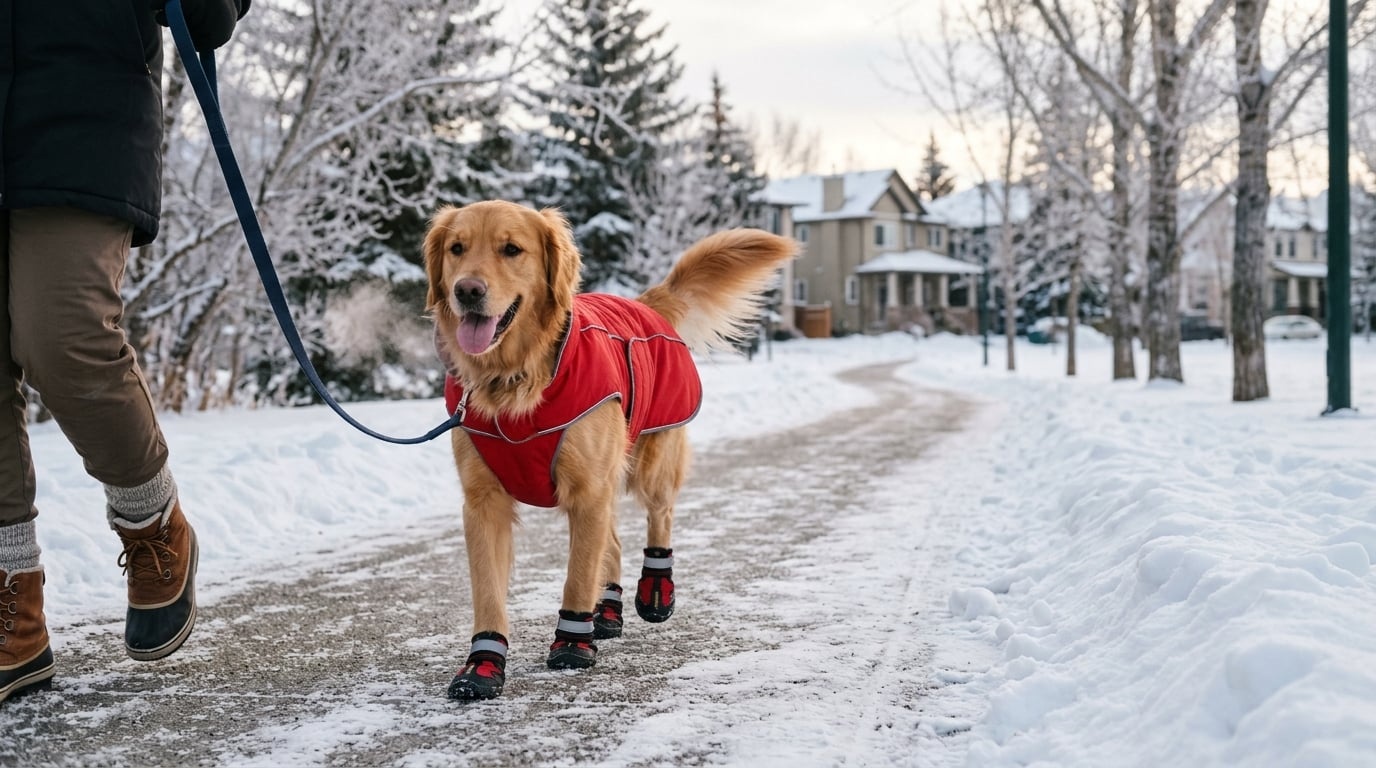
For most healthy adult dogs in Calgary, walks are safe down to about -10°C. Between -10°C and -20°C, shorten the walk and add a coat and boots. Once the temperature — or the wind chill — drops below about -20°C to -25°C, limit outings to quick bathroom breaks, and below roughly -28°C keep every dog inside. Small, short-haired, senior, and very young dogs feel the cold well before big double-coated breeds do. Below is a Calgary-specific guide to making the call, including how chinooks and wind chill change everything.
How cold is too cold to walk a dog in Calgary?
For a healthy medium or large dog with a normal coat, normal walks are comfortable down to around -10°C. Below that, cold becomes a real factor: from -10°C to -20°C most dogs need a coat and shortened walks, and below about -20°C outdoor time should be limited to short bathroom breaks for all but cold-adapted breeds.
Those numbers are a starting point, not a rule. Veterinary cold-weather guidance is built around the same tiers — comfortable above roughly 7°C, cautionary near freezing, and genuinely risky once you drop below about -7°C for vulnerable dogs. In Calgary, the deciding factors are usually wind, moisture, and your individual dog rather than the raw air temperature.
Why wind chill matters more than the thermometer
Wind chill is what your dog actually feels, and in Calgary it routinely runs 5–15 degrees colder than the air temperature. A -18°C morning with a stiff northwest wind can carry a wind chill near -30°C, which is enough to put paws and ears at frostbite risk within minutes.
Always check the wind chill, not just the temperature, before a winter walk. Damp fur makes it worse: a dog that rolls in snow or gets wet loses its coat's insulating loft and chills far faster. On windy days, pick sheltered, treed routes over exposed hilltops, and cut the walk short the moment the wind picks up.
The Calgary cold-walk temperature guide
Use this as a quick reference, then adjust for wind chill and your specific dog.
Double-coated northern breeds (Huskies, Malamutes, some Shepherds) tolerate the colder end better, but even they are at risk of frostbite on ears and paw pads below about -25°C wind chill.
Which dogs feel the cold first?
Body size, coat type, age, and health all change the threshold. The dogs that need the most protection are small breeds, thin-coated breeds, puppies, seniors, and any dog with a chronic illness.
Watch your dog, not just the forecast. Shivering, lifting or licking paws, whining, slowing down, or turning back toward home all mean it's time to head in — regardless of what the thermometer says.
Chinooks: Calgary's wildcard
Calgary's chinooks can swing the temperature by up to 20°C in a matter of hours, turning a bitter -25°C morning into a +5°C afternoon. These warm, dry "snow-eater" winds off the Rockies are a gift for winter dog walking — but they come with hazards.
The rapid melt-and-refreeze cycle chinooks create leaves pathways glazed with black ice, which is dangerous for both dogs and owners. Don't over-dress your dog on a chinook afternoon; a heavy coat that was right at dawn can cause overheating by lunchtime. And if your dog seems off during a sudden warm-up, you're not imagining it — the same pressure swings linked to "chinook headaches" in people can leave some dogs subdued too. Watch the pathways for ice, adjust layers to the real-time conditions, and take advantage of the mild window while it lasts.
Frostbite and hypothermia: the warning signs
Frostbite hits the extremities first — ear tips, tail, and paw pads — and often isn't obvious until hours later. Watch for skin that looks pale, grey, or bluish, feels cold and firm, and may later redden, swell, or blister.
Hypothermia is the whole-body emergency. The early signs are intense shivering, lethargy, and stumbling; the dangerous sign is when violent shivering suddenly stops, along with pale or bluish gums, stiffness, and slow, shallow breathing. If you suspect hypothermia, get your dog indoors immediately, wrap them in warm (not hot) blankets, offer lukewarm water, and call your vet or a Calgary emergency clinic on the way. Never use direct high heat, which can cause burns and worsen shock.
Protecting paws from ice melt and salt
The City of Calgary and private lots treat roads and sidewalks with salt, sand, and chemical ice-melt all winter, and these are hard on paws. They cause painful cracking and chemical burns on paw pads, and dogs ingest the residue when they lick their feet afterward.
Boots are the gold standard — they block all contact with chemicals and cold. If your dog won't tolerate boots, use a paw balm or wax as a barrier, and always rinse and dry paws in lukewarm water after every winter walk. Park pathways generally get less chemical treatment than city sidewalks, which is one more reason off-leash green space beats roadside walking in winter. Our winter essentials guide for Calgary dogs and dedicated dog boots guide cover fit and training in detail.
What to do on days that are too cold to walk
When it's genuinely too cold, skip the walk and burn energy indoors instead. A dog's exercise need doesn't disappear at -30°C — but it can be met inside.
Calgary also has indoor dog facilities and drop-in daycares for the worst stretches — see our indoor dog parks guide. For a full seasonal game plan, our post on how to prepare your dog for a Calgary winter walks through gear, acclimatization, and routine.
Where to walk when it's cold but safe
On merely-cold days, choose sheltered, treed parks over open, wind-exposed ones. Wind is the enemy, and tree cover makes a large difference to the feels-like temperature.
Wooded river-valley parks like Edworthy Off-Leash Park block the wind under their canopy, and the fenced, treed areas of Sue Higgins Park offer pockets of shelter plus safety in low winter light. Remember the bylaw still applies in winter: on paved pathways, even inside off-leash parks, your dog must be leashed on a lead no longer than two metres. If you're fuzzy on the rules, our guide to Calgary's dog bylaws breaks them down.
Bring a clip-on light or LED collar — Calgary is dark by 4:30 PM in December — keep walks brisk to hold body heat, and always finish with a paw check and a warm towel in the car.
Updated July 2026.