Calgary's first snow of the season arrived over the Thanksgiving long weekend, and plenty of local dogs met it nose first.
Environment and Climate Change Canada issued a special weather statement ahead of the weekend, calling for the season's first accumulating snow across much of Alberta on Saturday, October 10.
Forecasters expected Calgary's daytime high to reach only about 3°C, with an overnight low near -1°C and 2 to 5 cm of snow possible between Calgary and Edmonton.
That is a sharp drop from the normal mid-October high of about 14°C.
If your dog spent the summer chasing water access and shade, the switch to snow, slush and early darkness changes almost everything about where and how you play.
This guide covers how dogs in snow actually cope, which Calgary off-leash parks work best after a snowfall, when an indoor dog park is the smarter call, and how to pick what is best for your own dog on any given day.
For hard temperature cut-offs, our guide to when it is too cold to walk your dog in Calgary has the full chart.
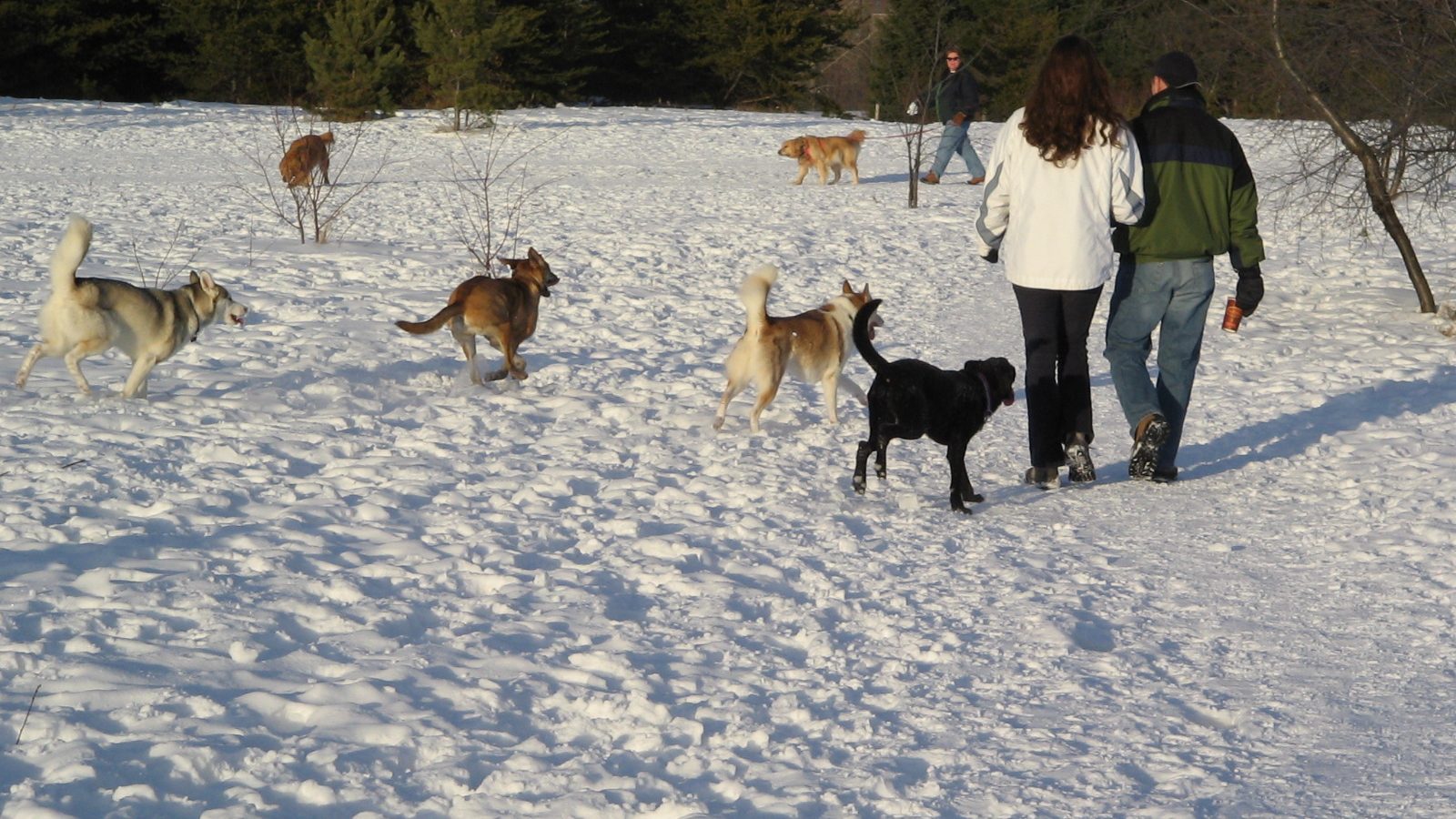
Is snow safe for dogs?
Yes, most healthy dogs can play safely in snow, and many love it.
The risks come from what snow hides, what it does to wet fur and paws, and how long your dog stays out.
Keep early-season snow sessions short, check paws for ice balls, stop your dog from eating snow near roads, and head inside at the first sign of shivering or limping.
Puppies, seniors, small breeds and thin-coated dogs reach their limit much sooner than a husky or a Bernese.
What changes for dogs when the first snow falls
Wet snow soaks through fur
Early fall snow in Calgary is usually wet and heavy rather than dry and powdery.
Wet snow melts into the coat, and damp fur loses most of its insulating value.
A dog that rolls in slush at 0°C can end up colder than the same dog on a dry day at -10°C.
Towel your dog off before the car ride home, and keep a dry towel by the door for the next few months.
Ice balls build up between toes
Snow packs into the fur between paw pads and freezes into hard little balls.
They pinch with every step, and you will often see a dog suddenly stop, limp, or chew at a foot.
Trimming the fur between the pads level with the pads helps a lot, and a thin layer of paw balm before the walk stops snow from sticking.
Boots solve the problem completely if your dog will wear them, and our dog boots guide covers fit and training.
Snow hides hazards you could see all summer
A fresh layer of snow covers broken glass, sharp sticks, holes and fallen nuts.
In parks with Ohio buckeye trees, the toxic nuts that dropped in September are now buried, which makes them easier for a curious nose to find than for you to spot.
Read our Ohio buckeye warning before your next park visit if your local park has these trees.
Snow also hides the edges of ponds and creeks, and that matters more than any other hazard this time of year.
Thin ice is the biggest early-season danger
Ponds, wetlands and river edges skim over with ice weeks before that ice can hold any weight.
A dog chasing a ball or a goose onto October ice can break through in seconds, and owners who go in after them are at even greater risk.
The City of Calgary warns people never to go onto the ice on stormwater ponds, because moving water underneath keeps the ice weak and unpredictable.
Keep your dog leashed near any open or partly frozen water until well into winter.
If your dog does go through the ice, do not follow them onto it, and call 911.
Wet snow on leafy trees brings down branches
Environment Canada flagged this risk ahead of the long weekend, because many Calgary trees were still holding their leaves when the snow arrived.
Leaves catch heavy, wet snow, and the extra weight can snap branches that look perfectly healthy.
In treed river-valley parks, watch for hanging or cracked limbs over the trails for a few days after a heavy snowfall, and give damaged trees a wide berth.
Anyone who remembers Calgary's September 2014 snowstorm knows how much damage one early snowfall can do to the city's trees.
Eating snow is mostly fine, with exceptions
Most dogs eat a little snow, and a few mouthfuls of clean snow in a park are harmless.
Snow along roads, sidewalks and parking lots is a different story, because it can hold road salt, ice melt, sand and engine fluids.
Large amounts of snow can also upset a dog's stomach and chill a small dog from the inside.
Carry water on cold-weather walks so your dog is not relying on snow to stay hydrated.
Our ice melt and paw damage guide explains what the city's de-icers do to paws and what to do about it.
Darkness arrives earlier
Calgary is losing daylight fast, and clocks fall back one hour on Sunday, November 1.
After that, the after-work walk happens in the dark for most owners.
A clip-on light or an LED collar keeps your dog visible to cyclists and other owners on shared pathways, and our LED safety guide compares the options.
Outdoor park or indoor dog park: which is best today?
There is no single right answer for every dog, so match the outing to the weather and to the dog in front of you.
Choose an outdoor off-leash park when
Choose an indoor dog park when
Choose a private rental when
Stay home and do enrichment when
Best Calgary off-leash parks after a snowfall
Sheltered, treed parks hold up best in early winter, because tree cover cuts the wind your dog actually feels.
Edworthy Off-Leash Dog Park along the Bow River offers canopy and river-valley shelter, but keep your dog back from the water as shelf ice starts to form.
Sue Higgins Dog Park in the southeast has fenced, treed sections that add a layer of safety in low winter light.
Fish Creek Provincial Park gives you long, sheltered valley trails, though it is worth scanning for broken branches after any heavy, wet snowfall.
Nose Hill Dog Park is spectacular on a calm, sunny day after fresh snow, but its open grassland is badly exposed to wind, so save it for still afternoons.
If your dog's recall gets shaky in fresh snow, our list of fenced dog parks in Calgary is the place to start.
Remember that dogs must be leashed on paved pathways, even inside off-leash parks, and our Calgary dog bylaws guide covers the rest.
One closure to know about: the Southview off-leash area beside Deerfoot Trail has been closed since March 31, 2025, for the provincial Deerfoot Trail Improvements project.
That closure is expected to last for the rest of the project, which is anticipated to run until the end of 2027, according to the Ward 9 office.
Check the City of Calgary's off-leash areas map before you head somewhere new this winter.
Calgary indoor dog park options for snowy days
When the forecast turns, Calgary has a handful of genuine indoor options, and each suits a different kind of dog.
Petfinity's discounted weekday happy hour is not offered when the temperature drops below -15°C, so check before you drive out on the coldest days.
Calgary's indoor facilities ask for current DAPP, rabies and Bordetella records, and most want them uploaded online before your first visit.
Our full indoor dog parks guide has addresses, current pricing and a what-to-bring list, and you can read more about the Barrett facility on our Barrett off-leash area page.
What is best for your dog? A quick match-up
Your first-snowfall checklist
Our winter essentials guide and the fall and winter gear section of our store have specific product picks for Calgary conditions.
Warning signs to watch for
Bring your dog inside if you see shivering, repeated paw lifting, whining, slowing down, or turning back toward home.
Pale or greyish skin on the ear tips or paw pads can signal frostbite.
Stumbling, stiffness or pale gums can signal hypothermia.
Either one means getting your dog warm right away and calling your vet or a 24-hour Calgary emergency clinic.
Snow can be a highlight, not a hassle
For most dogs, the first snowfall is one of the best days of the year.
A little planning turns Calgary's long winter into months of good outings, whether that is a crisp morning at Edworthy or a warm hour at an indoor park while the wind howls.
For the full season plan, read how to prepare your dog for a Calgary winter and our fall safety and preparation guide.
Photo: Sarah N / Flickr via Wikimedia Commons, CC BY 2.0.